Resources

Resources

Practical guides for sorting and composting at home, our publications, and research on waste in the Kathmandu Valley.

Which bucket?

Where does it go?

Search more than 40 everyday items — in English or Nepali — to see which bucket they belong in.

Print the kitchen poster

Green bucket

Waste that rots

Food and anything from plants or animals that rots. It becomes compost.

  • Vegetable peels and scraps
  • Fruit peels and cores
  • Leftover food — rice, dal, curry, roti
  • Used tea leaves and tea bagsPull the staple out of tea bags first.
  • Used coffee grounds
  • Egg shellsCrush them so they compost faster.
  • Flowers, garlands and puja offeringsTake off plastic, foil and threads first.
  • Leaves, grass and garden trimmings
  • Onion and garlic skins
  • Corn cobs and husks
  • Peanut and nut shells
  • Used tissues and paper napkins
  • Bones, meat and fish scrapsFine in the green bucket; in a home compost bin use only small amounts, as they attract animals.
  • Spoiled or mouldy food (out of its packet)
  • Cow dung
  • Sawdust and cold wood ashOnly cold ash, a little at a time.

Red bucket

Waste that does not rot

Plastic, paper, glass, metal, cloth and rubber. Keep it clean and dry — much of it can be recycled.

  • Plastic bagsShake them clean and keep them dry.
  • Plastic bottles and containersEmpty, rinse and squash them.
  • Noodle, chips and biscuit wrappers
  • Milk and curd pouchesRinse them first so they do not smell.
  • Newspaper, notebooks and office paperKeep it dry — clean paper can be recycled.
  • Cardboard boxesFlatten them.
  • Juice and milk cartons (Tetra Pak)
  • Glass bottles and jars
  • Broken glass and mirrorsWrap it in thick paper and mark it, so collectors do not get cut.
  • Tins, cans, foil and metal
  • Old clothes, bags and shoesGive away anything that can still be worn.
  • Rubber and slippers
  • Thermocol (styrofoam) and packing foam
  • Plastic cups, plates and straws
  • Sanitary pads and diapersWrap them in paper or a bag first.
  • Broken cups, plates and clay potsWrap sharp pieces.
  • Toothbrushes, pens and small plastic items
  • Cigarette butts

Keep separate

Hazardous waste

Not in either bucket. Store it safely in its own box or bag, hand it over separately, and never burn it.

  • Batteries and cellsKeep them in a closed box; never burn or bury them.
  • Mobile phones, chargers and electronicsGive them to e-waste recyclers or repair shops.
  • CFL bulbs and tube lightsThey contain mercury — do not break them.
  • Expired medicinesKeep them in their packets; never pour them into drains.
  • Needles, syringes and bladesPut them in a hard bottle with a lid and label it.
  • Paint, pesticide and chemical containersClose them tightly; never pour leftovers into drains.
  • Spray cansDo not puncture or burn them.
  • Mercury thermometers

Guide

Three ways to compost at home

Kitchen waste makes up most of what a household throws away. Composting it at home means less waste to collect and free manure for your plants.

  1. 1

    Bin composting

    A closed plastic bin with air holes. Add kitchen waste in layers with dry leaves or soil; compost is ready in about two to three months.

  2. 2

    Vermicomposting

    Red composting worms in a shaded wooden box eat kitchen scraps and leave fine, rich manure. Keep it moist, not wet, and away from sun and rain.

  3. 3

    Pile composting

    For gardens and schools with space: heap green and brown waste in layers, turn it every week or two, and cover it from heavy rain.

Publications

Newsletters, manuals and books

Printed copies are available at our office. Write to us and we will send what we have.

  • NEPCEMAC Sandesh

    Our annual newsletter on environmental issues and waste management, for communities, local governments and partner organisations.

    Ask for a copy
  • Urban Solid Waste: A Great Problem & Simple Solution

    A book on the waste problem in Nepal’s cities and practical ways households and communities can solve it.

    Ask for a copy
  • Composting manual: compost manure

    Step-by-step pile and bin composting for homes, schools and communities.

    Ask for a copy
  • Composting manual: EM and Bokashi

    Using effective micro-organisms (EM) and Bokashi to compost kitchen waste quickly and without smell.

    Ask for a copy
  • Composting manual: vermicompost

    Keeping composting worms in a box to turn kitchen waste into rich manure.

    Ask for a copy
  • Training manual on solid waste management

    The material behind our trainings for students, women’s groups and community leaders.

    Ask for a copy
  • Pamphlets and bulletins

    Short, illustrated guides used in door-to-door and school awareness programmes.
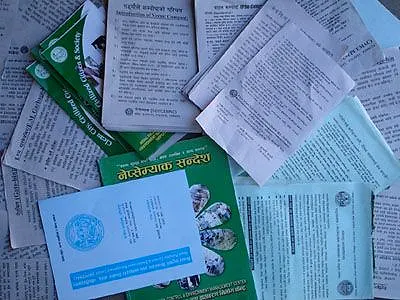
    Ask for a copy
NEPCEMAC leaflets, booklets and the NEPCEMAC Sandesh newsletter

Documentary

See NEPCEMAC at work

A short documentary about our work in solid waste management, from collection and sorting to composting and awareness.